
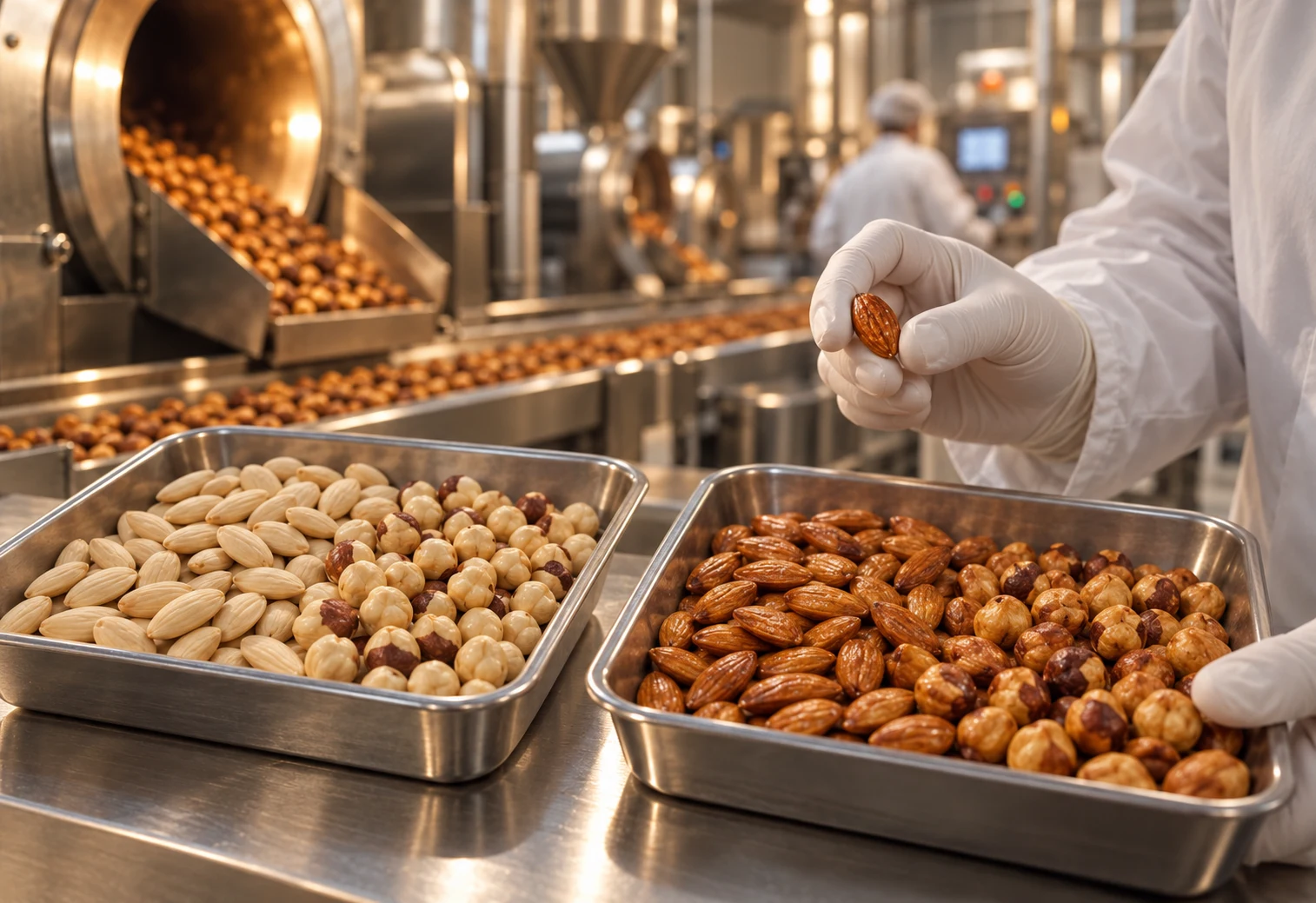
In the nut aisle, you will often find the same product in raw, roasted, salted and unsalted versions. No single one of these is the right choice for every use. What decides it is the flavour you are after, the nature of the recipe, how much control you want over salt and how the nuts will be eaten.
What are raw nuts?
Products sold as raw have not been through a roasting stage. They may have a softer texture and a simpler aroma that brings out the natural character of the variety. People who make granola, plant-based drinks, nut butters or desserts at home may prefer raw nuts when they want to decide the degree of roasting for themselves.
Why are roasted nuts different?
Applying heat in a controlled way brings out the aromatic notes in the product and can create a crunchier texture. In a successful roast, the heat is evenly distributed, so there is no unpleasant difference in hardness between the inside and the outside of the nut. Over-roasting, on the other hand, can mask the natural aroma and lead to burnt or bitter flavours.
Salted or unsalted?
Salt enhances flavour, particularly in products intended for serving to guests. However, for anyone keeping an eye on their total daily salt intake, unsalted or lightly salted options make it easier to stay in control. When buying, look not only at the wording on the front of the pack but also at the ingredients list. Spiced mixes may contain sugar, flavourings or various coating ingredients as well as salt.
Which should you choose for which use?
- Snacking straight from the pack: Evenly roasted products with a level of salt that suits your taste are the convenient choice.
- Baking and desserts: For nuts that will be heated again in the recipe, raw or lightly roasted options give a more controlled result.
- Salads and breakfast: Unsalted products do not overpower the flavour of the other ingredients.
- Nut butters and sauces: Roasted nuts give a more pronounced aroma, while raw nuts offer a simpler base.
- Corporate hospitality: Offering salted and unsalted options in separate bowls is a good way to cater for different preferences.
Compare the labels before you decide
When comparing two different products made from the same nut, read the order of the ingredients, the net quantity, the salt information, the allergen warnings and the storage conditions together. If the roasting method or any added ingredients are stated on the packaging, you will find it easier to pick the option best suited to your purpose.
In conclusion, the main difference between raw and roasted nuts is not simply crunch. Aroma, how they behave in a recipe and any added ingredients also influence the choice. The best approach is to decide what you will be using the product for and then choose without compromising on freshness or packaging quality.